Native DLL vs .NET DLL: What Is the Difference?
Learn the difference between a native DLL and a .NET DLL, including runtime, code format, metadata, architecture, exports, decompilation, and analysis tools.
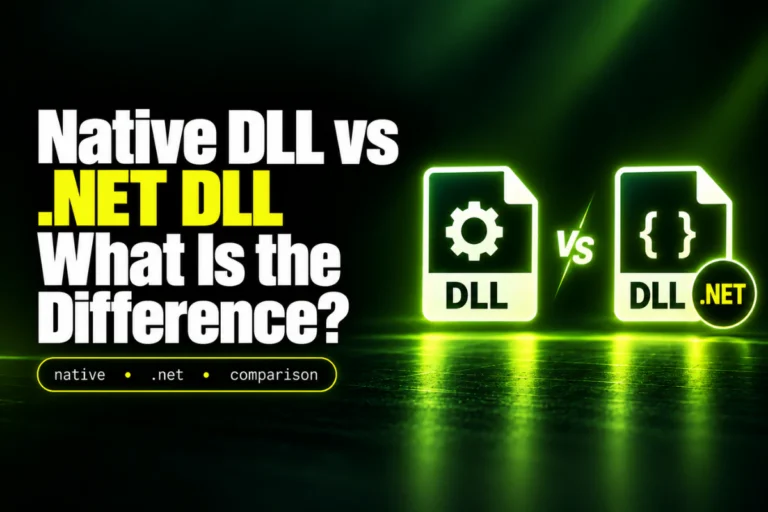
Learn the difference between a native DLL and a .NET DLL, including runtime, code format, metadata, architecture, exports, decompilation, and analysis tools.
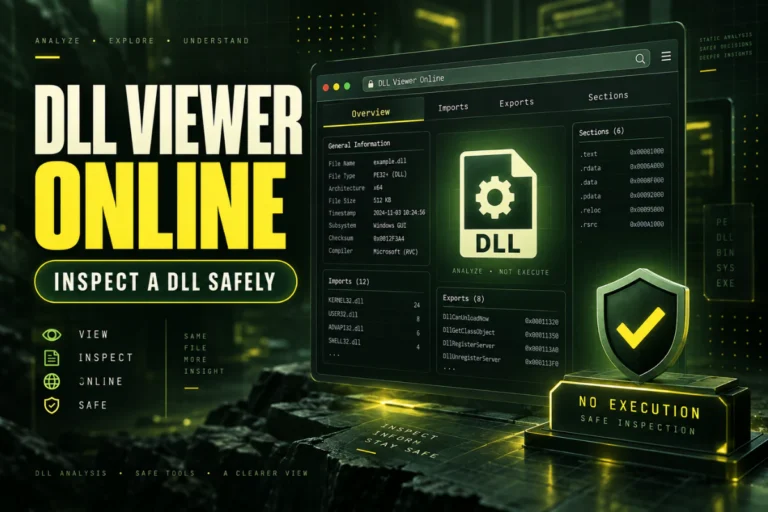
Use a DLL viewer online to inspect architecture, imports, exports, PE headers, sections, and hashes safely without running the DLL file.
Learn what DLL imports and exports are, how Windows uses import and export tables, what named functions and ordinals mean, and how they help with DLL analysis.
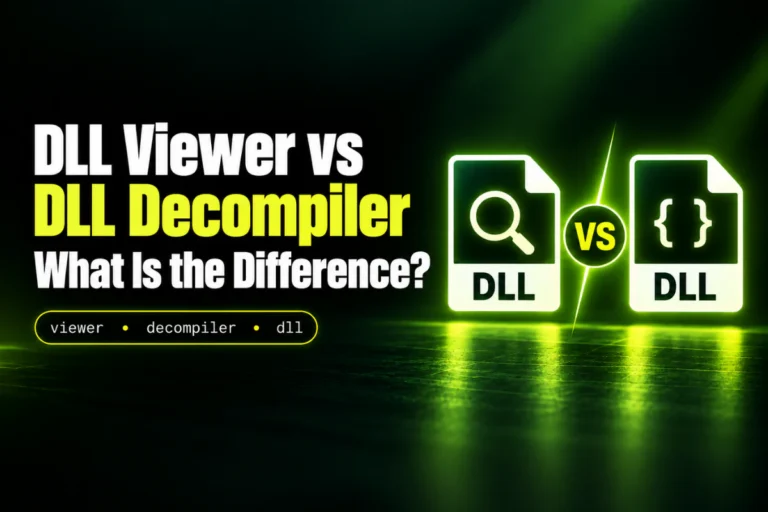
Learn the difference between a DLL viewer and DLL decompiler, what each tool shows, when to use one, and how native and .NET DLL analysis differs.
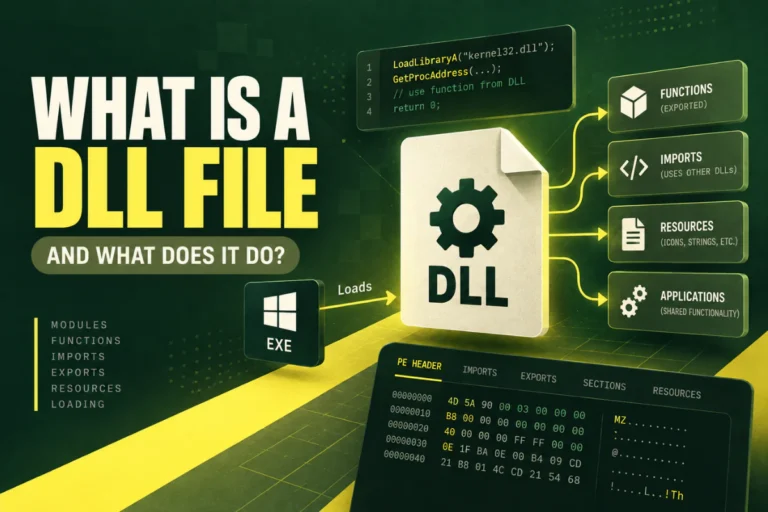
Learn what a DLL file is, how Dynamic Link Libraries work in Windows, what they contain, why programs use them, and how to inspect DLL files safely.
Learn how to check a DLL file before using it by verifying its source, SHA-256 hash, architecture, version info, imports, exports, sections, and signatures.
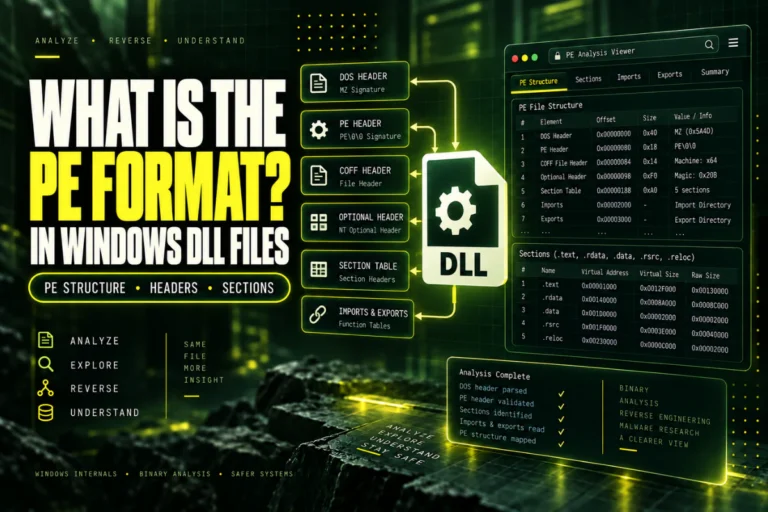
Learn what the PE format is in Windows DLL files, how Portable Executable headers, sections, imports, exports, resources, and data directories work.
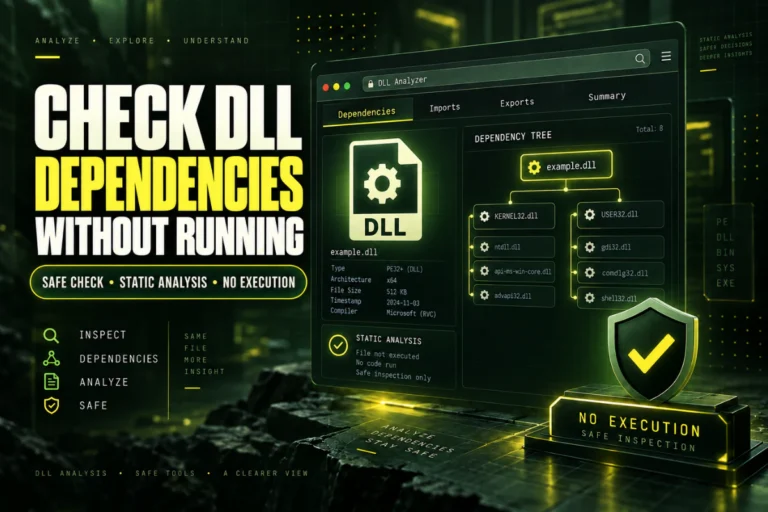
Learn how to check DLL dependencies without running the file. Inspect imports, recognize missing runtimes, and understand the limits of static analysis.
Learn why random DLL download websites can be risky, how wrong or modified DLLs cause errors, and safer ways to replace missing DLL files in Windows.
Learn how to check if a DLL is a .NET assembly using CLR metadata, PE headers, PowerShell, and .NET tools, and understand managed vs native DLLs.