How to Check a DLL File Before Using It
Learn how to check a DLL file before using it by verifying its source, SHA-256 hash, architecture, version info, imports, exports, sections, and signatures.
Learn how to check a DLL file before using it by verifying its source, SHA-256 hash, architecture, version info, imports, exports, sections, and signatures.
Learn the difference between a DLL viewer and DLL decompiler, what each tool shows, when to use one, and how native and .NET DLL analysis differs.
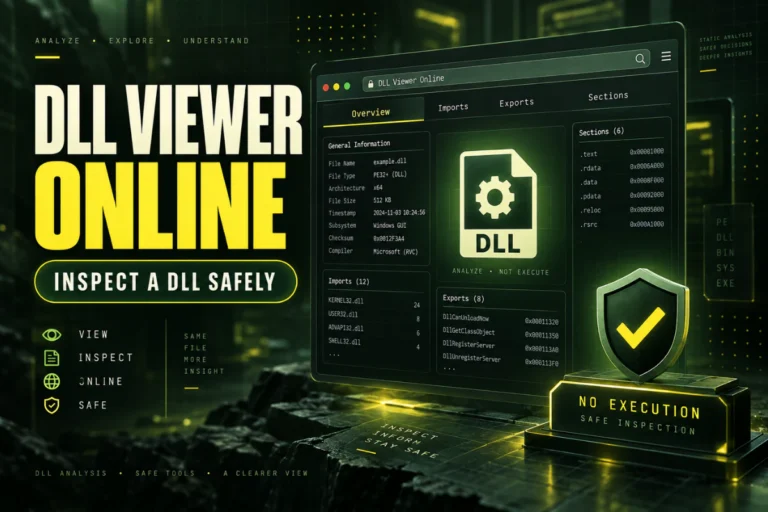
Use a DLL viewer online to inspect architecture, imports, exports, PE headers, sections, and hashes safely without running the DLL file.
Learn what a DLL decompiler online can recover from .NET and native DLL files, what information is lost after compilation, and when to use a viewer first.
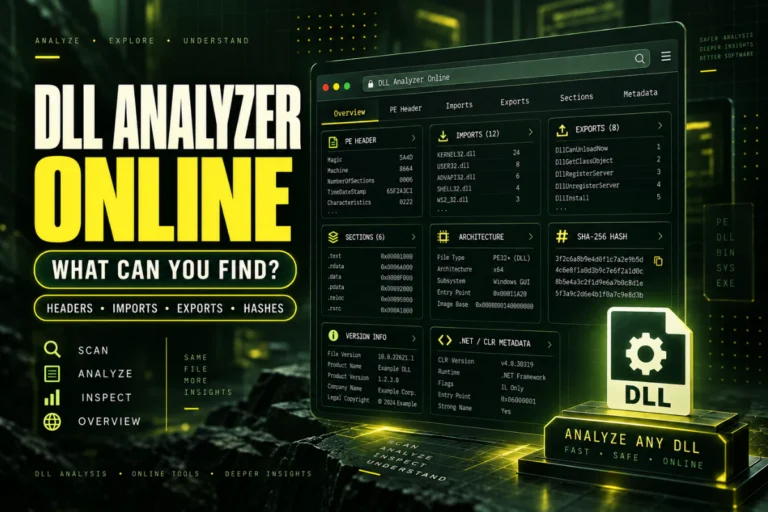
Use a DLL analyzer online to inspect architecture, PE headers, imports, exports, sections, hashes, and other DLL metadata without running the file.
Learn whether you can decompile a DLL file, how .NET and native DLL decompilation differ, what tools recover, what gets lost, and how to inspect DLLs safely.
Can a DLL file contain a virus? Learn how malicious DLLs work, which warning signs matter, and how to inspect an unfamiliar file before using it.
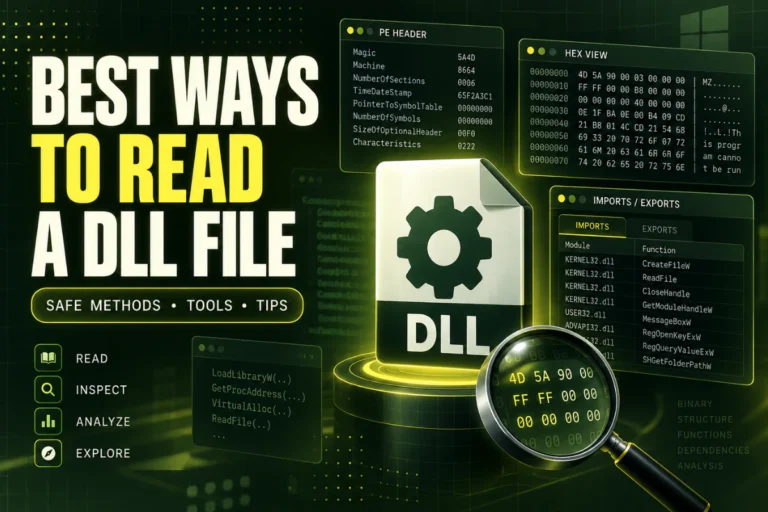
Learn the best ways to read a DLL file, from online viewers and PE analysis to exports, imports, strings, resources, and .NET decompilation.